
We don't need to make Trump voters out to be bad people
This comment was first published on Friday, October 25, 2024, in Berlingske.
In our little pond, we have constructed a convenient narrative about those on the other side of the Atlantic who have voted or intend to vote for Trump, writes Özlem Cekic.
When the then Democratic presidential candidate Hillary Clinton gave a campaign speech on September 9, 2016, she called her opponent Donald Trump's core supporters a "basket of deplorables." Loosely translated, this means "a bunch of sad losers."
That's what Trump's voters were to Clinton. That comment makes it clear that citizens on the other side of the political spectrum are not worth spending time on.
There was certainly some legitimate political criticism somewhere in Clinton's tirade against Trump, but the moment she turned her sights on American voters, she undermined her own criticism and—worst of all—dug the already deep trench even deeper.
It has been some time since those condescending comments were made in 2016. And although we are unlikely to hear Kamala Harris make a similar remark, I believe that Clinton's comments reflected a problem within the Democratic Party that has yet to be resolved.
To me, Clinton's comments about Trump voters exposed the Democrats' inability to understand the challenges faced by the working class. Historically, the Democrats have been the ones who secured basic social, political, and economic rights for workers and the underclass.
Democratic presidential candidate Kamala Harris recently appeared for an interview on Fox News, which is known to be a Trump-friendly channel. When asked why she refers to Republican voters as stupid, she immediately dismissed the claim as false. This is, after all, an improvement on Clinton's remarks in 2016.
But we cannot ignore the fact that, even though neither Harris nor the Democrats directly say that Trump's voters are stupid or pathetic, an image of Trump's voters as extremists has been created not only in the US but also in the rest of the world.
This image was understandably reinforced by the storming of Congress on January 6, 2021. But this is a minority of the 74 million people who voted for Trump in 2020, and we must assume that not all of them are extremists. That would be a far-fetched claim, wouldn't it?
I am, of course, aware that it is very difficult to ask this question in Denmark, and that I have probably already offended some readers.
In a new poll by the Verian Institute, 88 percent of Danes say they would vote for Democratic presidential candidate Kamala Harris if they could vote in the US presidential election on November 5. Only five percent would vote for Trump.
I am not claiming that I am different. On the contrary. I would also vote for Harris if I could. But I still believe that because such a large majority of Danes support Harris, there is a real risk that we overlook our own bias and prejudices about Trump's voters.
Trump would be a disastrous choice for democracy, the US, and the world. I believe this partly because I disagree with him politically. But I also don't believe that he possesses the stature and human qualities needed to lead the free world.
However, this does not mean we need to make Trump voters into worse people. Since the 2016 election, we have built up a narrative in our little pond about those on the other side of the Atlantic who have voted or intend to vote for Trump.
It has been a convenient narrative because it has allowed us to quickly dismiss the radically different choice of president without actually considering why people voted the way they did. The result is a narrative that is caricatured, stigmatizing, and extremely prejudiced.
Inequality is rampant in the United States. The richest one percent of the population—popularly known as "the top one percent"—owns a full 30 percent of the country's wealth. Meanwhile, the lower and middle classes struggle to make ends meet and often have to take on multiple jobs.
I may well wonder why Trump's voters would put their cross next to the name of a man who is himself part of the upper class. But it is also part of the narrative that massive immigration is pushing wages down, creating A and B teams in the workplace, and challenging American values in the border states.
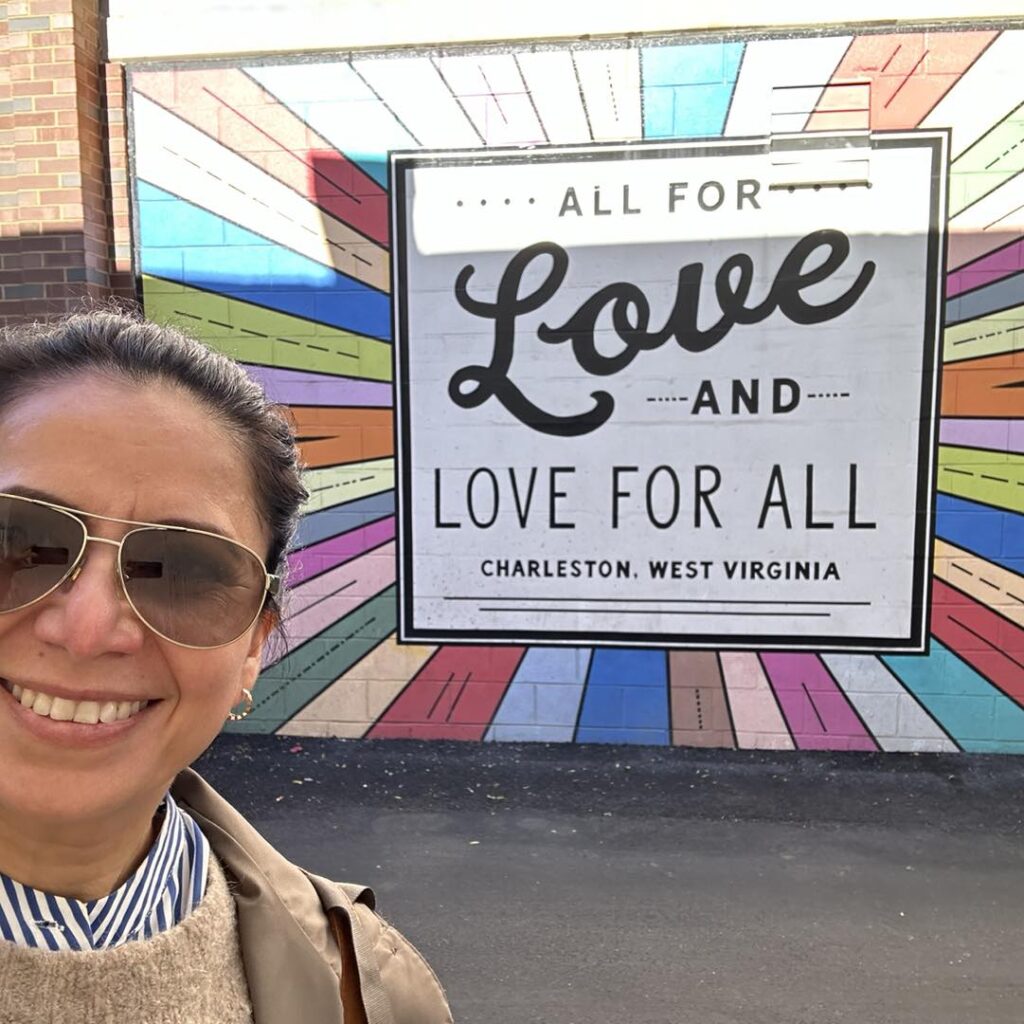
I am writing this column from West Virginia, where I am beginning my dialogue coffee tour of the United States. Here, I will travel around and learn more about Americans' attitudes and the divisions that have taken root in American society.
Perhaps I can learn more about Trump's voters, and perhaps I can even learn more about my own prejudices and blind spots.